
 Q: Can you tell me a bit about you?
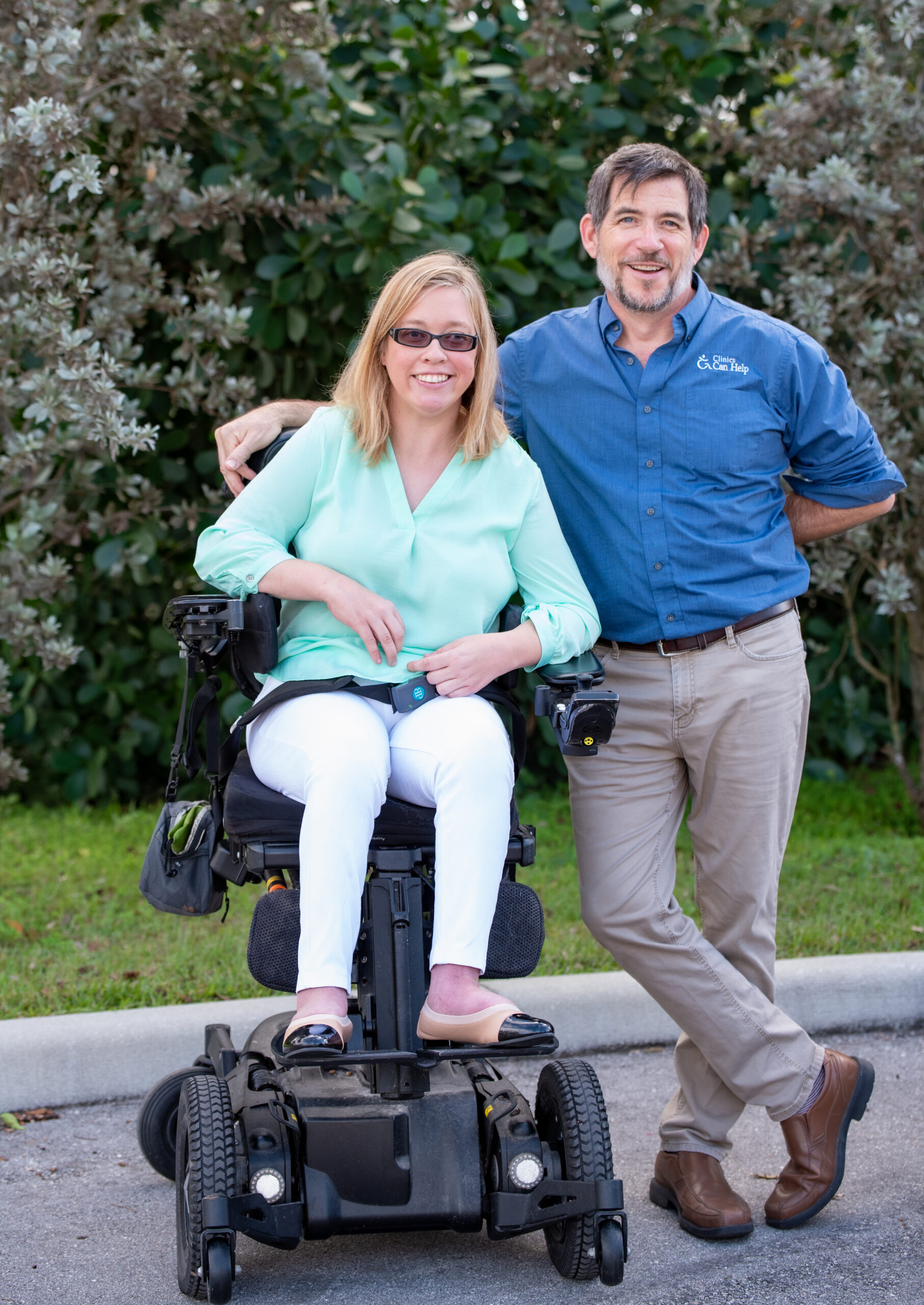
Absolutely. My twin sister, Christina, and I were born two months prematurely, which led us to have cerebral palsy, so I’ve had firsthand experience navigating the challenges that come with needing specialized medical equipment and support, resources which are outrageously expensive and simply out of reach for so many individuals with disabilities. Over the years, I’ve personally used a variety of walkers, manual wheelchairs, and powered wheelchairs equipment my parents were able to afford with the help of insurance when I was growing up, and that I’m fortunate to be able to afford on my own now as an adult with the varying support insurance does provide. We would always keep second or third versions of each device as backups when needed and to have different options available for different situations, which has given me a deep understanding of how critical the right equipment is—not just for mobility, but for independence, comfort, and overall quality of life. That perspective really shapes the work I do today with my family and our other equally as passionate board members through the LEEDS Foundation.
Q: Can you tell me us your words about the LEEDS Foundation?
LEEDS Foundation was created out of a very personal place. My parents founded it after my twin sister and I were gifted two service dogs—Hemingway and Freedom. They immediately became an integral part of our family, and we knew others could benefit the same ways we were. That inspired them to give back throwing a party amongst their friends, which was successful and a lot of fun, and from there, the LEEDS Foundation was born. What started as a desire to support one organization grew into something much bigger. We saw a direct need in the community, realized that many people want to help, and we could use their meaningful support to fund vital needs in the community that desperately needed to be met. The LEEDS Foundation exists to bridge that gap—connecting resources to real needs.
Today, we support several initiatives, including service dog training, adaptive sports programs, inclusive social programs, and legacy nonprofit partners like Clinics Can Help.
Q: How long have you been working with and supporting Clinics Can Help?
Clinics Can Help was actually one of the very first nonprofits the LEEDS Foundation ever supported. They’re truly part of our foundation’s legacy. From the beginning, there’s been a natural alignment between our missions, and that partnership has only grown stronger over time.
Q: Why is this work important to you?
For many individuals and families, especially those on fixed incomes or with limited insurance coverage, medical equipment, essential for survival and quality of life, isn’t an option. Yet, so often, people are forced to go without or settle for the lowest-quality options simply because of cost. That shouldn’t be the reality. Everyone deserves access to the resources they need to thrive, regardless of their financial situation. That belief is at the heart of everything we do.
Q: How do you feel about the work Clinics Can Help does in our community?
The work is incredible. Clinics Can Help is filling a critical gap by providing medical equipment to people who otherwise wouldn’t have access. What makes it so impactful is that it’s not just about equipment—it’s about restoring dignity, independence, and hope. Their work directly changes lives in a very tangible way, and we are happy to be a partner in the critical support they are providing to families. Each year, we receive a list of children needing new customized equipment from Clinics Can Help, and depending on the time of year, how much we’ve raised previously, and where we are in our current funding cycle dictates how many pieces of equipment we can help Clinics Can Help purchase on behalf of some of their youngest recipients. We will occasionally get a one-off request for additional support from Owen throughout the year, which we are happy to accommodate if we have the funding available. Last October or November, one such request came in and we were able to help purchase a Rifton chair for a child with sanfilippo syndrome.
Q: You’ve met some of the individuals helped thanks to the LEEDS Foundation’s support. What does that mean to you?
It’s the best feeling. When you meet someone and see firsthand how their life has improved, it really puts everything into perspective. Sometimes it’s one piece of equipment, one adjustment—but that one thing can completely transform someone’s daily life. It’s like Christmas morning for them and for us. You’re lifting a burden off their shoulders, making something that once felt impossible suddenly manageable. It is powerful.
Q: Do you have any goals or things on the horizon that you’re excited about?
We’re always looking to support new and innovative opportunities—especially when it comes to equipment. There’s no such thing as “one size fits all,” and we want to ensure people have access to well-fitting, cutting-edge solutions that prioritize posture, comfort, and long-term health. Cost should never be the barrier to getting the right equipment.
We also really value building long-term relationships with the families we serve. It’s about quality over quantity—growing with them, adapting to their needs, and empowering them to become advocates in the community. That kind of ongoing impact is what drives us forward.
At its core, the partnership between the LEEDS Foundation and Clinics Can Help is about meeting real needs with compassion and intention. Together, they are creating pathways for individuals—especially children and young adults—to live fuller, more independent lives, proving that access to care should never be limited by circumstance.